A University Is Ultimately Defined by Its People
A beautiful campus can attract attention.
Modern laboratories can improve learning.
Strong branding can generate enquiries.
But none of these can replace the people responsible for running an educational institution.
The quality of the Vice-Chancellor influences institutional direction. The Registrar supports effective governance and administration. Deans shape academic functions. Heads of Department influence teaching culture. Professors determine what students experience inside classrooms. Placement professionals connect students with industry. HR, IT, procurement, library, sports, research and administrative teams keep the wider institution functioning.
That is why private university recruitment cannot be treated as ordinary staffing.
A university is effectively recruiting several different organisations under one roof: academic leadership, teaching, research, administration, student services and corporate functions.
Each requires a different way of evaluating candidates.
Recruiting a Vice-Chancellor Is Very Different From Recruiting a Professor
The distinction seems obvious, yet many institutions use almost the same recruitment approach for both.
A professor is primarily evaluated for academic qualifications, subject expertise, teaching, research and related academic accomplishments.
A Vice-Chancellor must operate at an institutional level.
The person may be expected to influence academic standards, strategy, research, external relationships, faculty development, reputation and overall university direction.
Similarly, the Registrar is not simply another senior administrator. The position plays an important role in institutional administration and governance.
Universities therefore need to define the outcome expected from each leadership appointment before beginning the search.
The University Grants Commission maintains regulations dealing with minimum qualifications and standards for teachers and other academic staff, while its regulatory framework continues to evolve. Institutions should assess every appointment against the regulations and other requirements applicable to them at the time of recruitment.
Academic Leadership Shapes the Institution
Between the Vice-Chancellor and teaching faculty sits a large group of academic leaders.
A private university may need a Pro-Vice-Chancellor, Dean of Academic Affairs, Dean of Student Affairs, Dean of Research, Dean or Director of International Affairs, Admissions Director, Training and Placement Director, Innovation Director, IQAC leadership and multiple Heads of Department.
These designations should not be hired merely according to years of service.
A Dean of Research requires a different profile from a Dean of Student Affairs.
An Admissions Director must understand student acquisition and institutional positioning.
A Training and Placement Director needs employer relationships and an understanding of industry expectations.
A Director of International Affairs may need experience in global academic partnerships and international student engagement.
Recruitment works best when the institution first defines what the department is expected to achieve.
Faculty Recruitment Requires More Than Qualification Matching
Professor, Associate Professor and Assistant Professor hiring forms the core of university recruitment.
But a degree and required years of experience do not automatically make someone a strong faculty member.
Institutions also need to understand the candidate’s ability to teach, mentor students, participate in research, collaborate with colleagues and contribute to departmental development.
For applied programmes, industry exposure can become particularly valuable.
The emergence of the Professor of Practice model also reflects the importance of bringing practical professional expertise closer to academic learning.
Private universities increasingly want graduates who understand theory but can also operate successfully in real workplaces. Faculty with appropriate industry exposure can help close that gap.
Heads of Department Need Academic and People Leadership
An excellent teacher does not automatically become an excellent Head of Department.
An HOD often needs to manage faculty, academic delivery, departmental planning, student issues, research expectations and coordination with university leadership.
That means the candidate needs both academic credibility and people-management ability.
When an HOD appointment goes wrong, its impact can be felt throughout the department.
When it goes well, the person can improve faculty culture, student outcomes and the overall performance of the programme.
For this reason, HOD recruitment deserves a deeper assessment than simply promoting the most senior available professor.
Universities Are Becoming More Connected With Industry
One of the most significant changes in higher education is the increasing importance of employability.
Students and families naturally want to know what happens after graduation.
This has made Training and Placement departments strategically important.
A strong university may require a Director of Training and Placement, TPO, Corporate Relations Manager, Industry Relations Manager and Internship Coordinator.
These professionals do much more than organise placement days.
They build long-term relationships with employers, understand what industries expect from graduates, develop internship opportunities and help create stronger connections between academic programmes and the employment market.
A university with excellent teaching but weak industry relationships may struggle to communicate its value to career-focused students.
Research, Incubation and Innovation Need Their Own Leadership
Private universities are also placing greater emphasis on research and entrepreneurship.
That creates opportunities for positions such as Dean of Research, Director of Research and Development, Research Coordinator, Director of Incubation, Innovation Manager and Director of Innovation & Entrepreneurship.
Strong professionals in these roles can help build research culture, encourage interdisciplinary work, create industry collaborations and support student or faculty entrepreneurship.
These candidates may come from universities, research organisations, innovation ecosystems or relevant industries depending on the institution’s objectives.
Again, the title alone does not define the ideal profile.
The university’s ambition does.
Non-Academic Hiring Is Just as Important
Universities are large operational organisations.
They need professional management in HR, procurement, IT, administration, marketing, admissions, public relations, student welfare, alumni relations, libraries and sports.
A Director of Human Resources may manage a workforce containing very different categories of employees, from senior professors to administrative staff.
Procurement teams can handle requirements for laboratories, IT infrastructure, books, furniture, campus operations and specialised equipment.
IT leaders may manage ERP systems, networking, cybersecurity, student platforms and digital infrastructure.
Marketing and admissions teams influence how the institution is positioned in an increasingly competitive education market.
A University Librarian supports access to academic resources and research.
Sports Directors, Sports Officers and Coaches contribute to campus life and student development.
These are not secondary functions. Together, they determine how smoothly the university operates.
Private Universities Need Pan-India Talent Search
Senior academic talent is not always available within commuting distance of the campus.
A university in Gujarat may find the ideal Dean in Rajasthan, the right Professor in Delhi, an experienced Registrar in Maharashtra or a strong academic leader in Bengaluru or Hyderabad.
This is why senior university recruitment often needs a Pan-India approach.
Location becomes one part of the decision rather than the first filter.
For niche academic leadership positions, headhunting can also be useful because many suitable professionals are already employed and may not be actively applying to advertised vacancies.
They need to understand the institution’s vision and why the new opportunity is worth considering.
Executive Search Can Improve Senior Academic Recruitment
Leadership hiring works differently from normal recruitment.
A search for a Vice-Chancellor, Pro-Vice-Chancellor, Registrar, Dean or senior Director should begin by understanding the institution itself.
What stage of growth is the university in? What problems need to be solved? What reputation does it want to build? Is research a major priority? Is the institution expanding internationally? Does it need stronger placement outcomes? Is a new school or faculty being established?
Once that context is understood, recruiters can identify people whose experience fits the institution’s actual requirement.
The result is a much more purposeful search.
RK HR Management for Academic and Non-Academic Recruitment
RK HR Management is an Ahmedabad-based recruitment consultancy providing manpower recruitment, staffing, executive search and headhunting, with more than 16 years of stated recruitment experience.
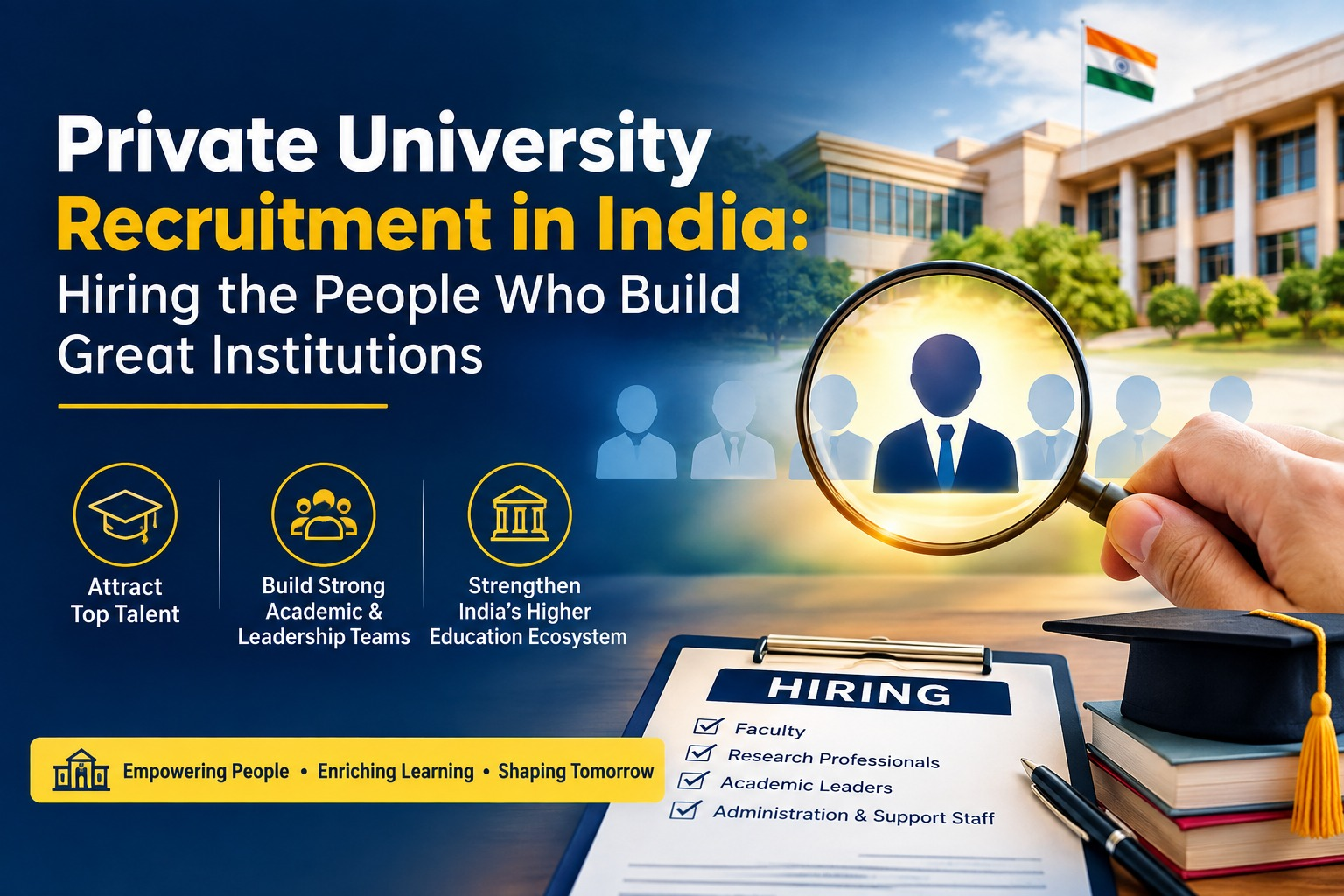
For private universities, recruitment requirements can extend from Vice-Chancellors, Pro-Vice-Chancellors, Registrars, Deans and Directors to HODs, Professors, Associate Professors, Assistant Professors and Professors of Practice.
The same recruitment mandate can also include Training and Placement Officers, Corporate Relations Managers, research professionals, sports leadership, librarians, procurement professionals, HR leaders, IT managers, marketing professionals, Public Relations Officers, alumni teams, student-welfare professionals and administrative officers.
Instead of treating each vacancy independently, universities can create an institution-wide manpower strategy covering academic and non-academic functions.
The Right Appointment Can Influence Thousands of Students
Very few industries demonstrate the long-term effect of recruitment as clearly as education.
A senior corporate employee may influence a team or business unit.
A great professor can influence thousands of students over a career.
A strong Dean can reshape an academic school.
A capable placement leader can create opportunities for entire graduating batches.
An effective Vice-Chancellor can influence the direction of a complete institution.
That is why private university recruitment deserves the same seriousness as any major strategic investment.
If your institution is expanding, establishing new programmes or looking for experienced academic and non-academic professionals, RK HR Management can support private university recruitment, faculty hiring, executive search and specialised education-sector headhunting across India.
Frequently Asked Questions
Can a recruitment consultancy hire Vice-Chancellors and Deans?
Yes. Senior university positions can be handled through executive search and headhunting, particularly when the institution needs experienced candidates who may not be actively applying.
Which academic positions can be recruited?
Requirements can include Professors, Associate Professors, Assistant Professors, Professors of Practice, HODs, Academic Coordinators, Programme Coordinators, Deans and other academic leaders, subject to the institution’s requirements and applicable regulations.
Can a recruiter handle non-academic university positions?
Yes. Recruitment can extend to HR, IT, procurement, admissions, marketing, placement, industry relations, research administration, sports, libraries, student welfare, alumni relations and general administration.
Can universities conduct recruitment across India?
Yes. Pan-India searches can significantly expand the available talent pool for specialist faculty and senior academic leadership positions.
What should universities consider before appointing academic staff?
Institutions should examine academic qualifications, experience, teaching or research background, leadership capability where relevant, cultural fit and all regulatory or statutory requirements applicable to the appointment.